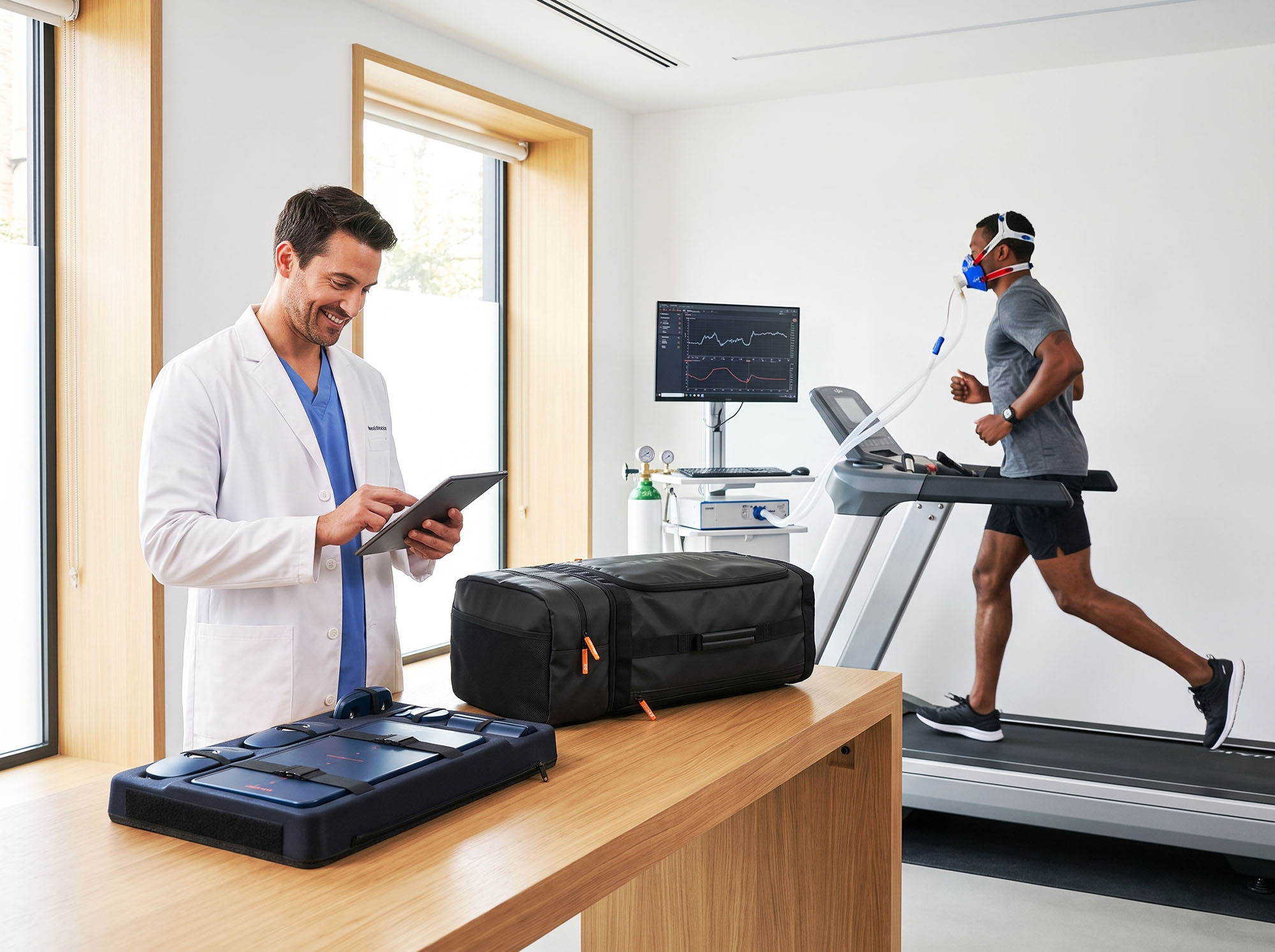
A professional bag carried by a field technician, sales rep, or clinical specialist isn't an accessory — it's a tool, opened dozens of times a day in conditions the designer will never see. Too many professional bags are still designed like consumer bags: aesthetic first, gear fitted around it after. That works for a weekend tote. It fails a field workforce that needs the bag to perform daily, under pressure, in front of colleagues and customers.
A user-centric bag starts from the opposite direction — the person, the task, the environment — and lets those constraints shape the design, including the aesthetic.
Understand the real user journey. Before any sketch, map what actually happens across a shift: where the bag goes (van, hospital corridor, client office), what's reached for first, and under what conditions — standing, kneeling, hands full. A field engineer servicing equipment outdoors has entirely different needs from a rep carrying a diagnostic device between clinics. This mapping produces a clear brief — what the bag must do, where, how often — that every later decision gets checked against.
Prioritize functions from high-value to front-facing. Not every feature deserves equal design attention. Motions made in front of a client — pulling out a demo device, opening a diagnostic kit — need to feel effortless: intuitive zippers, obvious orientation, nothing fumbled. Secondary functions, like a spare cable pocket used twice a week, can be simpler. Spreading design effort evenly across every pocket inflates cost without improving the moments that actually matter.
Design and test in the field, not just on paper. A spec sheet can say a strap is padded; it can't tell you it digs in once the bag is loaded, or that a zipper pull is awkward with gloves on. Field testing with real users on real tasks surfaces friction no CAD review catches — and it's far cheaper to fix before tooling than after complaints start.
Design against a budget without cutting function. The instinct to hit a unit-cost target by removing a feature usually backfires — the workforce feels that cut immediately. The better lever is substitution: cut-and-sew is cost-effective for smaller runs, while thermoformed or hybrid construction trades higher tooling cost for consistency at volume. A PU alternative delivers much of leather's look with better water resistance at lower cost. rPET typically costs no more than virgin polyester and adds a sustainability story for free.
Materials matter. Nylon is the workhorse for rugged use, available from lightweight linings up to 600D–1000D heavy-duty and ballistic-grade fabrics. Polyester/rPET offers strong color retention at low cost. Neoprene and jersey cushion sensitive equipment without bulk. Leather and PU sit at the premium end, with treatments like waterproofing and flame resistance layered on as needed. This is exactly where ForwardAP works with clients directly — matching fabric, denier, and treatment to real conditions, so durability is built in, not bolted on.
Done properly, the bag stops being overhead and starts doing real work — protecting equipment, speeding up the field team, and reinforcing the brand every time it's opened.